Ventilation-Based Brick Designs
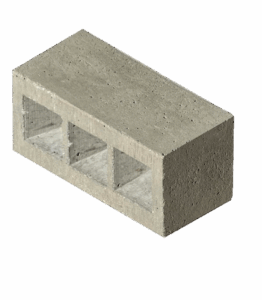
Venturi Brick
NATE SMITH
The Venturi Brick is a module that uses a truncated, horizontal hollow core to tap into the Venturi effect. This is in order to increase the air velocity of the prevailing winds as it moves through a wall that uses this module. Increased air movement will create a cooler environment in the hot and humid context of Ifakara. Many people choose not to use bed nets because they block air movement, resulting in hot and stuffy sleeping conditions. Mosquitos cannot inhabit places with a lot of air movement. The venturi effect has the potential to passively address the issue of human comfort, especially in terms of vector control. Constructions result in a decrease in pressure and an increase in velocity.
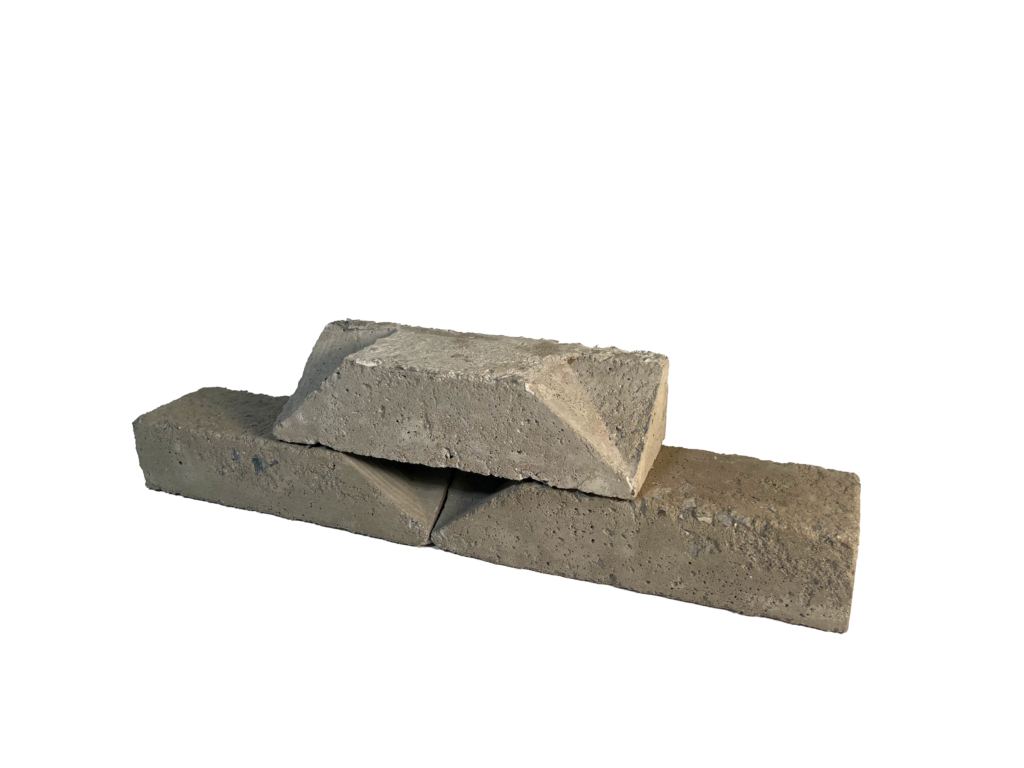
Airflow Brick
ERIC JACKSON
The brick design is based on the concept of promoting airflow into the space. In the hot and humid climate of Ifakara, Tanzania, much of the daily activity takes place outdoors. The interior of homes and buildings can become extremely hot as there is often not enough airflow into these spaces due to the lack of
window openings or cross ventilation. In spaces that do have windows, they are often covered up for privacy or filled with other bricks for safety. My brick design aims to solve some of these problems by bringing the exterior into the interior through airflow without compromising privacy, safety, or letting in direct sunlight
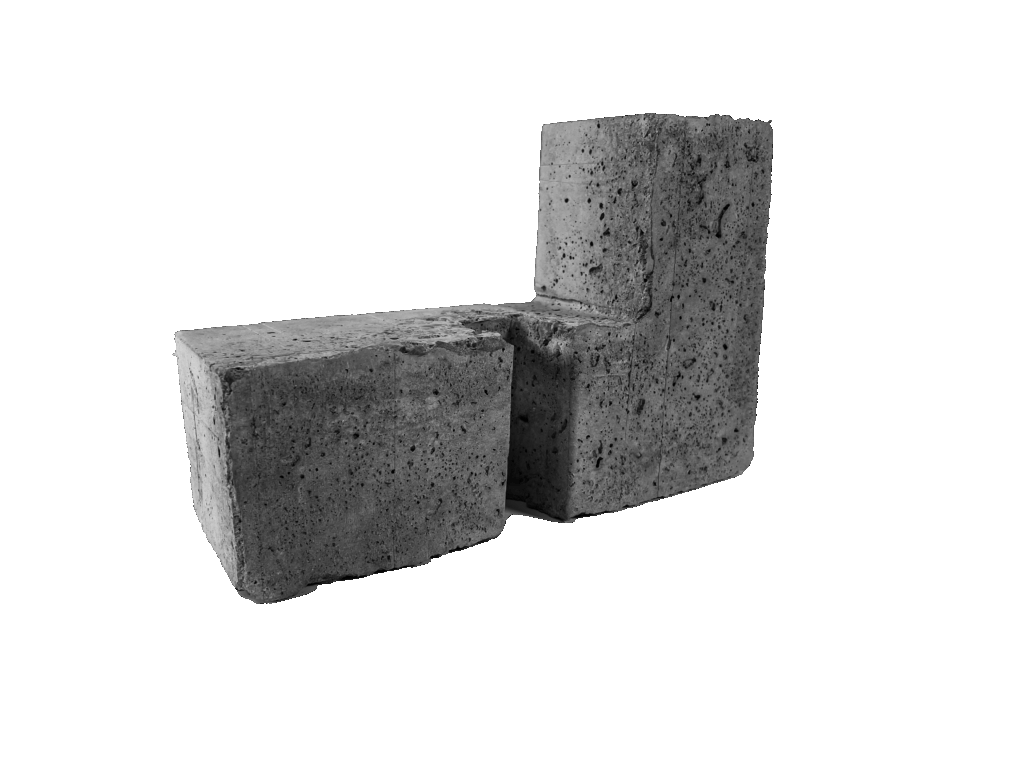
Vortex Shedding Brick
MICHAEL SERRANO
Mosquitoes generally prefer calm environments for movement, but when faced with turbulence, they struggle to navigate. A potential phenomenon that could be harnessed is vortex shedding, which can occur under various conditions, both small and large-scale. It involves the creation of vortices, which occur when a mass is exposed to flowing wind,
resulting in a turbulent wake on the opposite side of the mass. By leveraging vortex shedding, it becomes possible to disrupt the mosquitoes’ trajectory and guide them away from areas where they pose a risk to human health. However, a thorough analysis was necessary to ensure the feasibility of designing a brick that induces turbulence effectively.
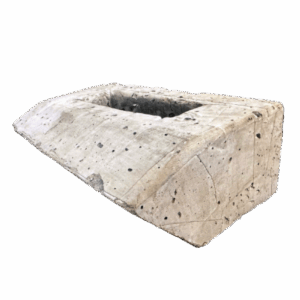
Solar Brick
KEENAN MADDEN
The design for the Solar Brick was informed by passive cooling strategies utilizing thermal mass as well as the buoyancy effect. The brick is designed to have a large surface area projecting out at an angle of 28 degrees, which is the optimal angle for maximizing solar gain for the specific latitude of Ifakara. Heat from the sun is absorbed and stored in the brick material and is then vented through the aperture in the back of the brick. In a wall configuration, all of the bricks act together as a singular solar chimney in which the sun’s rays heat air inside the air space, which creates a pressure differential between the top and bottom of the chimney. The higher-pressure air at the top causes air to flow upwards through the chimney and vent out of the top, which enables more air circulation and thermal comfort. The cavities in the back of the bricks align to create an insulating layer, which ensures that there is a temperature difference between the interior and exterior. The angled faces of the solar bricks, when placed at the top of the solar chimney, maximize solar gain and help create the buoyancy effect. The solar brick can be used in different ways to achieve
different functions within a wall system, depending on its orientation.
Thermal Brick
HECTOR RUBIO
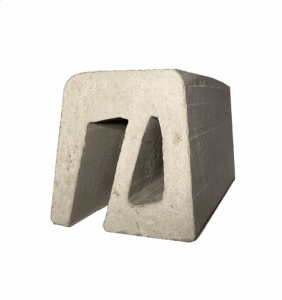
The simple design yet sophisticated permits the heat to be controlled by different layers of protection. The orientation of the angle of the first layer acts like a protective surface that absorbs solar radiation, but that is unconnected, avoiding the transfer of heat. The upper web that connects the outer/angle layer is connected by a web, but because of the assembly, stacking of the blocks, the block adobe would protect that web from solar radiation, allowing the transfer of heat to be
minimal. The second layer of protection is the gap. Air is allowed to pass through between the outside layer and the interior of the block, the air permits the ventilation that dissipates the transfer of heat to the interior of the block and eventually to the interior of the building. This concept allows most of the solar radiation absorbed to be minimized. The interior of the block also has a hollow opening that would act as a last source of protection that minimizing the transfer of heat.
Porotherm Brick
VAMSI KRISHNA KAMATHAM
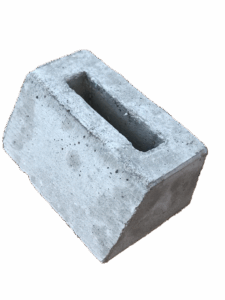
The term porotherm is used for this type of brick due to its porosity and desired thermal characteristics. The main aim is to provide air movement through a brick system, at the same
time achieve a certain level of privacy so that it can be used as an external wall system. The main idea is to accommodate all three key features – firstly, to promote the air circulation
through the brick. Secondly, protect the brick/ wall system from sun (i.e., minimizing solar heat transfer through conduction, convection, and radiation), and rain (i.e., dampness through
the brick). Thirdly, to accommodate a certain level of privacy (i.e., privacy-protected jali screen). The angular face is used to protect the brick from climatic and privacy points of view.
A recess is provided underneath to let the brick breathe and have a continuous flow of air cycle, so that thermal comfort is
achieved.
Stack Vent Brick
LOGAN JOHNSON
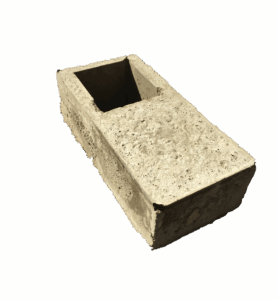
Using the stack effect, a passive cooling strategy, a modular brick was designed to be able to achieve this process while still being built by the common worker. Stack ventilation
works through buoyancy created through temperature difference between elevations, with the warmer air pulling the cooler air through a space, thus creating a draft through
a space. This effect will create less-stagnant interior climates, allowing for less use of bed netting while minimizing the access of mosquitoes into a building. The Stack-Vent Brick was developed with the idea of simplicity in mind. The brick fits seamlessly into the standard brick size used in Tanzania (approx. 12x6x5.5 in). To create the necessary opening to allow a draft to enter and exit the wall, one side of the brick can easily be chipped out, making the process much more efficient, while still being able to be a process that can be achieved by the common man.
Aero Brick
KAYLA BERLIN
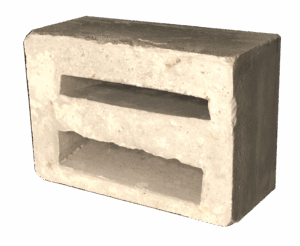
Controlling air ventilation direction and increasing the air velocity are the focus of the AeroBrick design. Not only with ventilation increases can thermal comfort in a home be achieved more easily, but ventilation can also deter mosquitoes, a major public health threat in rural Tanzania. Reduction of stagnancy of air within the home is crucial for deterring the mosquito species of Anopheles gambiae, funestus, and arabiensis, all found in focus regions and significant malaria vectors. The angles of airplane wings and car fenders
served as an inspiration for the air ventilation design, as both are critically influenced by the airflow acting on or over them. Their aerodynamic properties are essential in optimizing performance, which is why they offer valuable insights and direction for small modifications that can make a big impact. The brick design suggests the wing is flipped on the bottom section of the wall so that the cooler wind flows upwards from the floor to the occupancy plane. The brick would then exactly
emulate the top portion of the wall to push the air downwards towards the occupancy plane in the house. The brick makers would not need 2 different molds for the wall construction method for the top and bottom AeroBricks; the bricks would simply be rotated 180 degrees on their x-axis with respect to one another.
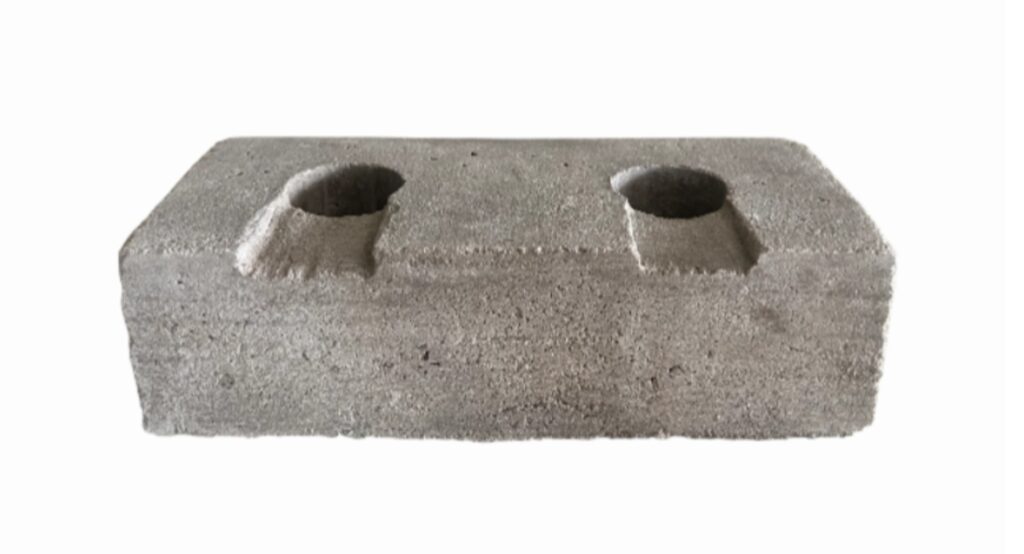
Ventilation Brick
GAEL GARZA
The proposed brick is designed to improve ventilation, though this comes at the expense of cross-sectional area, which would typically enhance the brick’s structural properties. To achieve its ventilation function, the brick features small latches along one side of the wall, allowing air to flow horizontally through the brick and up into the hollow cavity formed by the assembled wall. The dimensions of the brick were carefully designed to maximize airflow by incorporating double the latches per opening. Rather than relying on a single brick to achieve its full effect, the ventilation system is optimized through the collective arrangement of multiple bricks, where the openings work in tandem to facilitate air movement through the hollow cavity.